


An Essential Introduction to the Concept and Potential of Global Dark Fiber
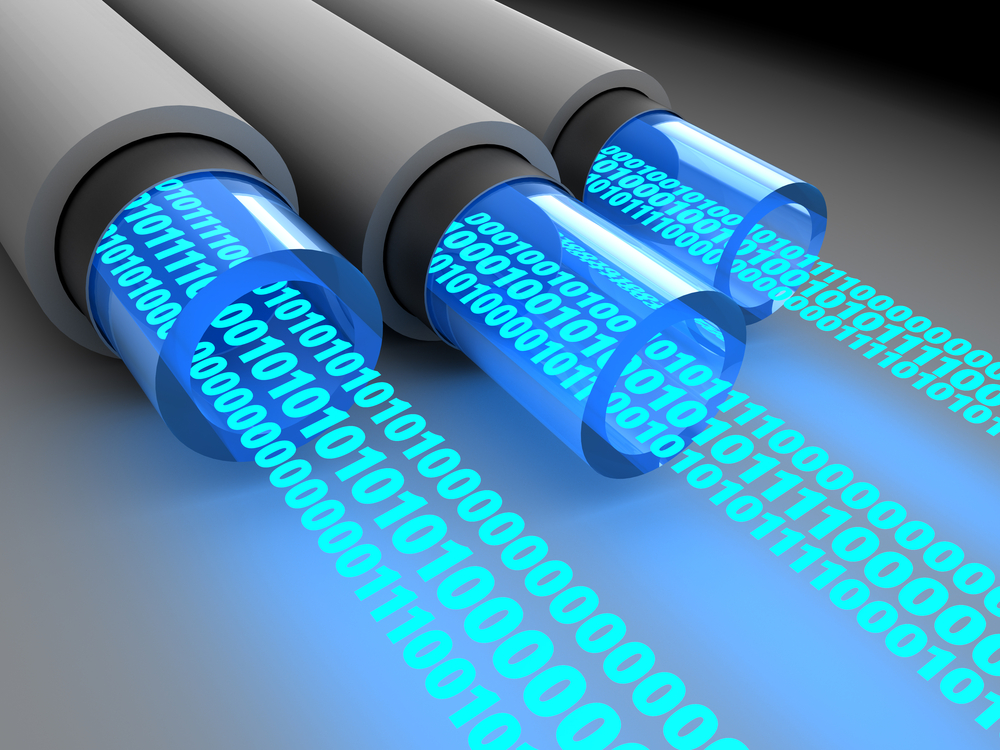
In the vast and complex world of digital infrastructure, the term Dark Fiber refers to a powerful and often misunderstood asset: unused, unlit strands of fiber optic cable. During the dot-com boom of the late 1990s and early 2000s, telecommunications companies installed massive amounts of fiber optic cable underground, far more than was needed at the time. The fiber that is actively used to transmit data with light-based signals is called "lit" fiber. The remaining, dormant strands are "dark fiber." Instead of buying a managed bandwidth service from a carrier, an organization can lease these dark fiber strands and "light" them with their own optical equipment. This transforms dark fiber from a simple glass strand into a private, high-capacity highway for data, giving the lessee complete control over their own network infrastructure from the physical layer up.
The core value proposition of leasing dark fiber is a powerful combination of control, scalability, and security. When an organization leases a dark fiber route, they essentially gain private ownership of that physical path for the duration of the lease. This gives them complete control over the network. They can choose their own transmission equipment from any vendor, allowing them to optimize for performance and cost. They manage their own network protocols and can upgrade their equipment at any time to increase bandwidth, without having to go back to the carrier to provision a new service. This ability to scale bandwidth on demand, simply by changing the electronics at either end of the fiber, makes it an incredibly "future-proof" investment, ensuring that the network can grow as the organization's data needs explode over time.
The primary customers for dark fiber are large-scale, sophisticated organizations with massive and mission-critical data transport needs. This includes hyperscale cloud providers like Amazon, Google, and Microsoft, who lease vast dark fiber networks to connect their massive data center campuses (a practice known as Data Center Interconnect or DCI). Mobile network operators are another major customer, leasing dark fiber to provide the high-capacity backhaul connectivity required for their 4G and 5G cell towers. Large enterprises in sectors like finance, healthcare, and media, as well as government agencies and research institutions, also lease dark fiber to build their own private, secure, and high-performance wide-area networks. Dark Fiber Market Is Projected To Reach $ 16.76B By 2035, Growing at a CAGR of 8.40% During 2025 - 2035.
In essence, dark fiber should not be thought of as a communications "service" but as a raw, physical infrastructure asset, akin to leasing a private, empty pipeline. The customer provides the "water" (the data) and the "pumps" (the optical equipment) themselves. This model provides an unparalleled level of privacy and security, as the data never traverses a public or shared network. It also offers predictable, flat-rate costs over a long-term lease, which can be far more economical than paying for metered, high-bandwidth lit services. For organizations that require near-limitless bandwidth, ultra-low latency, and complete control over their network destiny, dark fiber represents the ultimate foundation upon which to build their critical digital infrastructure.
Explore Our Latest Trending Reports:
Brewery Inventory Software Market Size
Vehicle to Infrastructure Communication Market Size

 English
 French
 Spanish
 Portuguese
 Deutsch
 Turkish
 Dutch
Dutch
 Italiano
 Russian
 Romaian
 Portuguese (Brazil)
 Greek
Greek