


Should Engineering Teams Require Supplier Notes And Batch Documentation For Wire
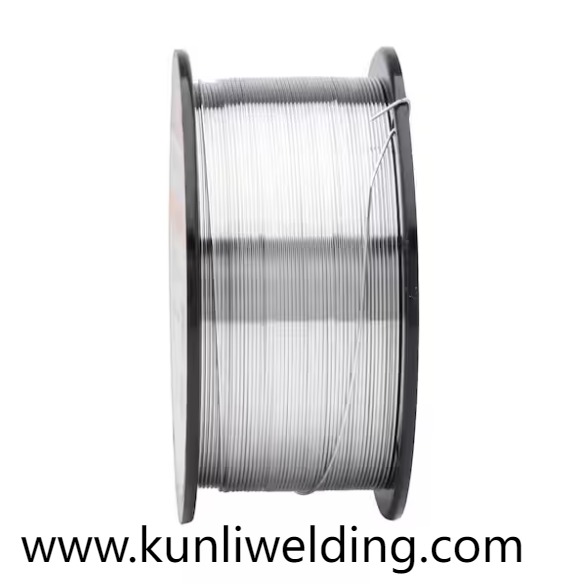
When choosing filler wire for aluminum fabrications, welders and engineers often weigh mechanical needs against finishing expectations. Aluminum Welding Wire ER5183 frequently enters these comparisons as an option favored for certain service environments, while ER5356 remains a common alternative in many shops. Understanding the practical differences between the two helps fabrication teams match filler selection to joint design, surface finish goals, and in service conditions without relying on trial and error.
One important distinction is how each wire behaves during welding and how that behavior influences final appearance and corrosion resistance. Where one filler may produce a smoother flow and predictable bead in a given process, the other might require different heat input or travel rate to achieve the same profile. These tendencies affect manual work and automated cells alike. When fabrication schedules tighten or when projects emphasize lightweight structures and environmental performance, choosing a wire that aligns with the production rhythm reduces rework and accelerates qualification.
Feedability and arc response are practical considerations for most shops. A wire that feeds steadily through gun liners or spools reduces interruptions and minimizes operator adjustments. Small differences in temper and strand finish alter how the wire passes through equipment and how it soft starts on arc initiation. For teams investing in higher volume operations or integrating new equipment, a filler with consistent feed behavior helps maintain throughput and reduces stoppages caused by burnback or bird nesting.
Surface finish and finishing operations matter for visible parts. Some fillers produce bead appearances that anodize or paint more uniformly when shop practice maintains consistent cleaning and weld parameters. That interplay between weld deposit chemistry and finishing processes guides decisions when the assembly will receive post weld surface treatments. Procurement and finishing teams should coordinate early so that filler choice supports downstream steps rather than forcing compromise after fabrication.
Corrosion performance in specific environments is another axis of comparison. Components that face marine or chemical exposure demand filler chemistry that complements the base metal and the chosen protective strategy. The right choice reduces the chance of local galvanic interactions or unexpected surface reactions once parts are in service. Engineering teams often pair material selection with agreed inspection checks so that appearance and service expectations are validated before large scale production.
Practical selection also includes supplier and handling factors. Reliable packaging, clear labeling, and handling guidance reduce the chance that contamination will alter welding behavior. Traceable batch documentation supports procurement and quality workflows, especially where audits or acceptance testing are required. Suppliers that publish application notes and provide accessible technical contact points make it easier to set initial process windows and shorten the trial phase.
Operator technique and process control complete the picture. Even an appropriate filler will underperform if travel speed, arc control, or shielding practice is inconsistent. Short qualification runs under representative joint conditions reveal how a chosen filler responds to the shop s standard equipment and operator motions. Recording the settings that produce the desired bead profile and keeping those records linked to lot identifiers reduces the chance of variability creeping into serial production.
When evaluating which filler to use, focus on the combination of deposit behavior, feedability, finishing compatibility, and supplier support. Treat selection as a systems decision rather than a single attribute choice. Trials on representative components, combined with supplier test notes and documented acceptance checks, deliver the objective insight necessary to move from pilot to production with confidence. For engineers and procurement teams wishing to review product details and supplier guidance on these filler options, technical materials and product pages are available from the manufacturer at www.kunliwelding.com .

 Arabic
 French
 Spanish
 Portuguese
 Deutsch
 Turkish
 Dutch
Dutch
 Italiano
 Russian
 Romaian
 Portuguese (Brazil)
 Greek
Greek